Petra is not just a tourist attraction – it’s one of the most extraordinary places on the planet. Carved from rose-red sandstone by the Nabataean civilization over 2,000 years ago, this ancient city in southern Jordan has been a UNESCO World Heritage Site since 1985 and one of the New Seven Wonders of the World since 2007. This complete Petra travel guide covers everything for your 2026 visit.
What Is Petra?
Petra (meaning “rock” in Greek) was the capital of the Nabataean Kingdom, a sophisticated Arab civilization that dominated trade routes across the ancient Near East from around the 4th century BC to 106 AD, when Rome annexed Nabataea. The city was home to an estimated 20,000-30,000 people at its peak.
The Nabataeans were master carvers – rather than building structures, they carved their city directly into the sandstone canyon walls. Tombs, temples, theatres, and palaces were all hewn from living rock. After Roman annexation and later an earthquake in 363 AD, Petra gradually declined. Crusaders used it briefly in the 12th century, then it was “lost” to the Western world until 1812, when Swiss explorer Johann Ludwig Burckhardt rediscovered it.
How to Get to Petra
Petra is located in the Wadi Musa valley in southern Jordan. The nearest town – also called Wadi Musa – is the base for visitors. Getting there:
- From Amman: 235 km (3-4 hours by car or JETT bus from Abdali terminal)
- From Aqaba: 130 km (2 hours by car)
- From Wadi Rum: 90 km (1.5 hours by car)
- JETT Bus: Daily service Amman-Petra, ~JOD 11 one-way
- Rental car: Most flexible; the King’s Highway route from Amman via Madaba and Kerak is spectacular
Petra Entrance Fees and Jordan Pass
Standard Petra entry fees for 2026:
| Duration | Price (JOD) | Price (~USD) |
|---|---|---|
| 1 day | ~JOD 52 | ~$74 |
| 2 days | ~JOD 83 | ~$117 |
| 3 days | ~JOD 97 | ~$137 |
With the Jordan Pass, Petra entry is included (1, 2, or 3 days depending on your package) along with the visa fee waiver and 40+ other Jordan attractions. For most visitors, the Jordan Pass is significantly cheaper than buying Petra tickets and a visa separately. See Jordan Pass Petra for full details.
Top Petra Highlights
The Siq
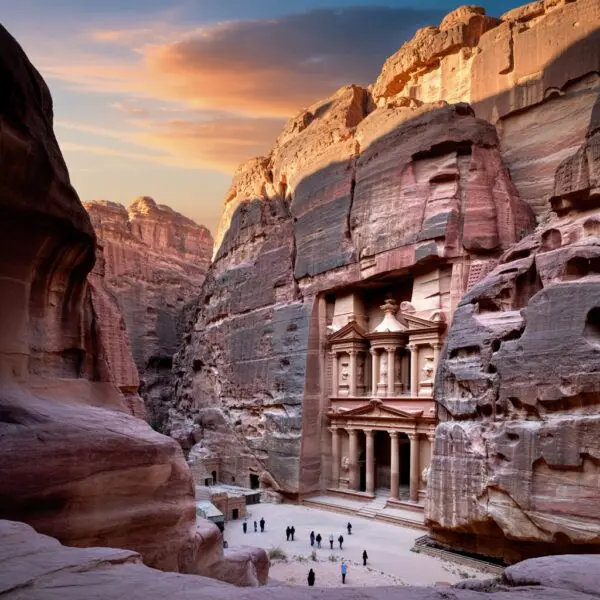
The entry to Petra is through the Siq – a 1.2 km narrow gorge with walls rising up to 80 meters. The walk through the Siq is one of the great theatrical approaches in travel: the canyon narrows, the light changes, and then – suddenly – you catch your first glimpse of the Treasury through a crack in the rock. One of the most jaw-dropping moments in travel.
The Treasury (Al-Khazneh)
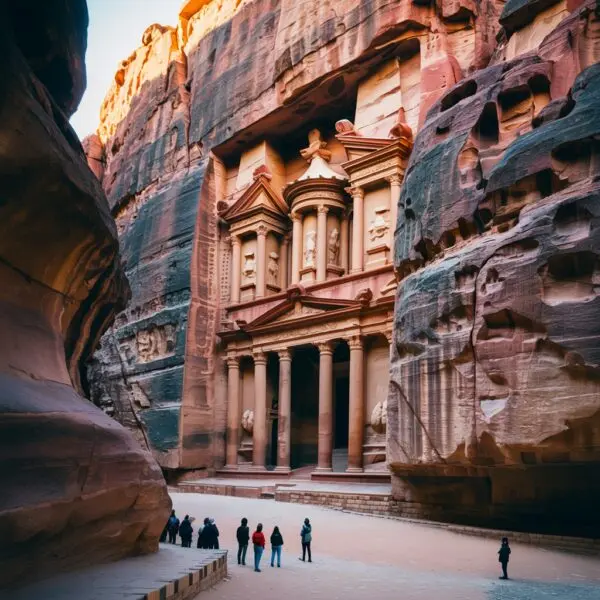
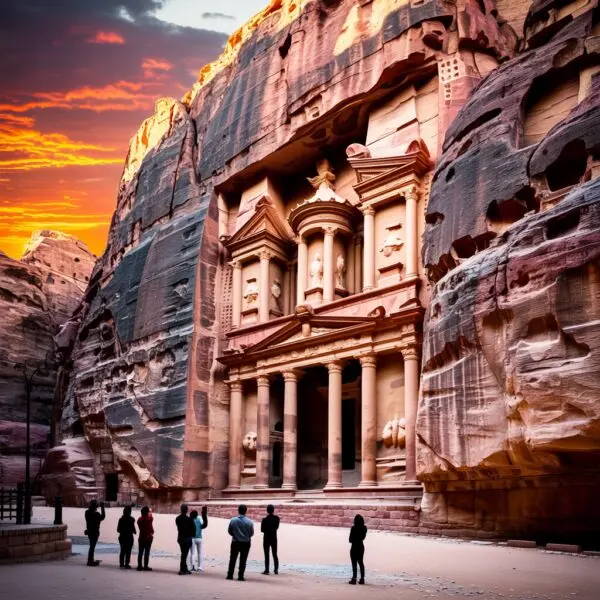
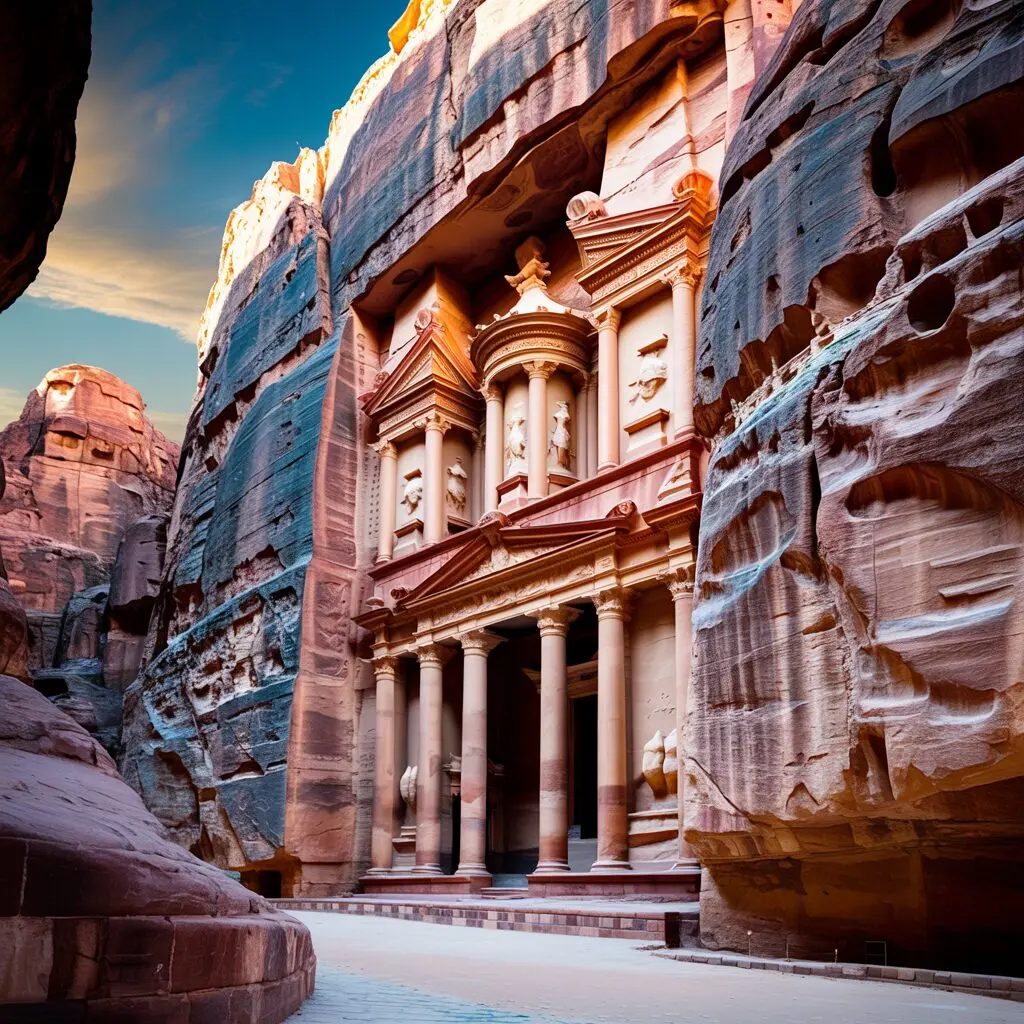
Petra’s most iconic monument – the towering carved facade rising 43 meters. Despite its name (“treasury”), this was almost certainly a royal tomb, probably for Nabataean King Aretas IV (9 BC – 40 AD). The carved detail is extraordinary: Corinthian columns, gods, eagles, and dancing figures. Featured in Indiana Jones and the Last Crusade.
The Street of Facades and Royal Tombs
Beyond the Treasury, dozens of carved tomb facades line the canyon walls – the Street of Facades. Further on, the Royal Tombs complex includes the Urn Tomb, Silk Tomb, Corinthian Tomb, and Palace Tomb – an entire cliff face carved into monumental tombs for Petra’s nobility.
The Roman Theatre
A full Roman theatre carved into the rock and seating 6,000 people – built or adapted during Roman rule of Petra. The engineering achievement of carving a theatre into a cliff face while preserving existing tombs on either side is extraordinary.
The Colonnaded Street and Nymphaeum
The Roman-era main street running through the heart of Petra, with original column bases still standing. At its end, the monumental Nymphaeum fountain structure.
The Monastery (Ad-Deir)
The largest carved monument in Petra – even bigger than the Treasury – but requiring an 800-step climb. Most visitors who skip the climb regret it. The Monastery’s facade is 45 meters wide and 50 meters tall. The climb takes 40-60 minutes and the views from the top are exceptional.
The High Place of Sacrifice
A ridge-top Nabataean altar with panoramic views over Petra and the surrounding mountains. Access via a separate trail from the main city. Excellent viewpoints for photography.
Petra Visitor Tips
- Arrive at 6 AM – gates open early and the light on the Treasury is best in the morning
- Wear walking shoes – you’ll cover 15-20 km per day on uneven terrain
- Bring water and snacks – restaurants inside Petra are expensive; pack a lunch
- Horse rides are included in your Petra ticket entry path but handlers may ask for tips – agree beforehand
- Donkeys are NOT recommended – they’re used on the Monastery trail but are stressful for the animals; the walk is achievable for most fit adults
- Stay in Wadi Musa for the best early-morning access
Petra by Night
Three evenings per week (Monday, Wednesday, Thursday), the Siq and Treasury are lit by 1,800 candles for a 2-hour walking experience with traditional Bedouin music and storytelling. Tickets cost approximately JOD 17. This is not included in the Jordan Pass but is worth adding to your itinerary.
Where to Stay Near Petra
Wadi Musa has accommodation at every budget:
- Budget: Rocky Mountain Hotel, Petra Guest House
- Mid-range: Movenpick Hotel Petra, Petra Palace Hotel
- Luxury: Amra Palace, Petra Marriott
Staying inside or adjacent to the entrance (Petra Guest House is right by the gates) allows the earliest possible starts.
Frequently Asked Questions
How many days should I spend at Petra?
At minimum, 1 full day. Most people recommend 2 days to see the main circuit and the Monastery comfortably. 3 days for in-depth exploration including the back trails and Little Petra. The Jordan Pass Explorer (2 days) is the most popular choice.
Is Petra suitable for children?
Yes – children love Petra’s dramatic landscapes and sense of adventure. The main circuit to the Treasury is suitable for older children on foot. The Monastery hike is manageable for fit children over about 8-10 years old. Under-12s typically enter free.
What is Little Petra?
Little Petra (Siq al-Barid, “the Cold Canyon”) is a smaller Nabataean site 5 km from the main Petra entrance, featuring carved facades, a painted dining room (triclinium), and a far more intimate atmosphere than main Petra. Entry has historically been free. A recommended half-day addition to any Petra visit.