
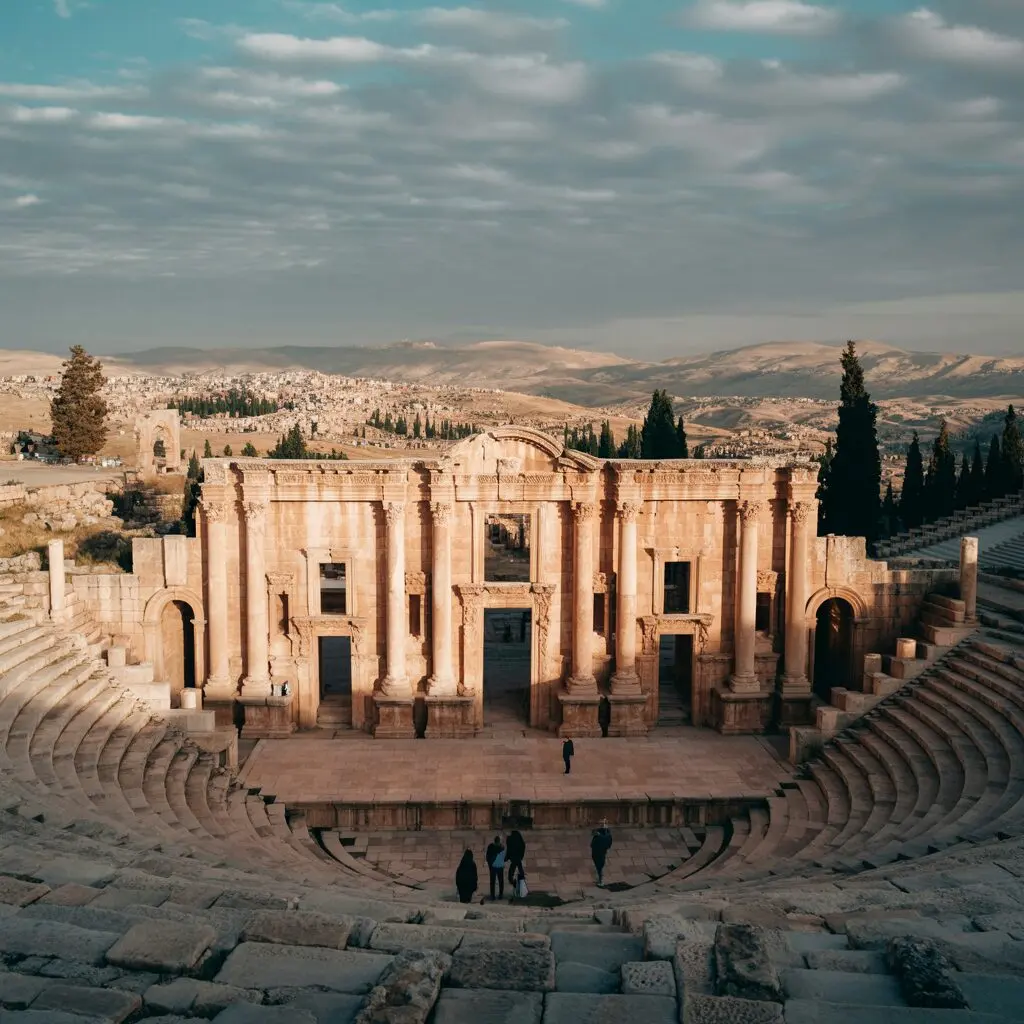
The ancient Roman city of Jerash is included in the Jordan Pass, giving you free entry to one of the best-preserved Greco-Roman cities outside Italy. This guide covers everything you need to know about visiting Jerash with your Jordan Pass in 2026.
Is Jerash Included in the Jordan Pass?
Yes – Jerash Archaeological Site is included in all Jordan Pass tiers (Wanderer, Explorer, and Insider). Without a Jordan Pass, the standard Jerash entrance fee is approximately JOD 10 (~$14 USD) per person for adults.
The Jordan Pass QR code is accepted at the main Jerash entrance gate (South Gate/Hadrian’s Arch). Simply show your pass and walk in for free.
What Is Jerash?
Jerash (ancient name: Gerasa) is a remarkably well-preserved Roman provincial city in northern Jordan, approximately 48 km north of Amman. Often called the “Pompeii of the East,” Jerash is considered one of the finest examples of Roman urbanism in the world.
Unlike many Roman sites scattered across Europe and North Africa, Jerash was largely buried under sand for centuries, which helped preserve its structures in extraordinary condition. The site was rediscovered and excavated beginning in the early 20th century.
Top Highlights at Jerash
Hadrian’s Arch
Built in 129 AD to honor Emperor Hadrian’s visit to Gerasa. This triumphal arch stands 21 meters tall and was originally intended to be the new southern gate of a city expansion that was never completed. It’s the first thing you see approaching the site and sets the tone magnificently.
The Oval Plaza (Forum)
The uniquely oval-shaped forum is one of Jerash’s most iconic features – unusual in the Roman world where forums were typically rectangular. Surrounded by 56 Ionic columns, it connects the Cardo Maximus (main street) to the Temple of Zeus.
Cardo Maximus (Colonnaded Street)
The main north-south street stretches the length of the city, flanked by hundreds of Corinthian columns. The original Roman paving stones still show chariot wheel ruts. Walking this street gives a genuine sense of the city’s ancient scale and grandeur.
South Theatre
The 3,000-seat South Theatre is still used for performances today, including the annual Jerash Festival of Culture and Arts. Its acoustics are remarkable – a whisper at the stage can be heard from the top tiers.
Temple of Artemis
The massive Temple of Artemis, patron deity of Gerasa, was one of the largest temples in Roman provincial architecture. Its towering columns remain standing, some showing the original engineering trick of slight wobble that allowed them to survive centuries of earthquakes.
North Theatre
Smaller than the South Theatre, the North Theatre was originally used for city council meetings (odeon). It has been partially restored and provides excellent views over the site.
Byzantine Churches
Jerash contains over a dozen Byzantine-era churches built from the 4th to 6th centuries AD, many retaining spectacular mosaic floors. The Cathedral complex near the Cardo is particularly well-preserved.
How Much Time Do You Need at Jerash?
Budget at least 2-3 hours for a thorough visit. History enthusiasts and architecture lovers could easily spend 4-5 hours. The site is large (~90 hectares) and walking between all the major monuments involves significant distance.
A half-day trip from Amman works well. Most organized Jerash tours combine it with a visit to Ajloun Castle (also included in the Jordan Pass), making a full northern Jordan day trip.
Getting to Jerash from Amman
- By public bus: From Amman’s North Bus Station (Tabarbour), minibuses to Jerash run frequently (~45 minutes, very cheap)
- By taxi/private car: ~45 minutes from central Amman, easily arranged through hotels
- On a tour: Many Amman operators offer half-day or full-day Jerash + Ajloun tours
Combining Jerash with the Jordan Pass Itinerary
Jerash fits naturally into a northern Jordan day trip combined with Ajloun Castle (also Jordan Pass included). Both are north of Amman and easily combined:
- Morning (9 AM – 12 PM): Jerash Archaeological Site
- Lunch: In Jerash town or drive to Ajloun
- Afternoon (2 PM – 5 PM): Ajloun Castle
- Return to Amman for evening
See our full Jordan Pass attractions list for more day trip ideas.
Jerash Festival
The Jerash Festival of Culture and Arts is held annually, usually in July-August, within the ancient site. It features concerts, theatrical performances, and cultural events staged in the Roman theatres and plazas. If visiting in summer, check the festival schedule – it’s a unique way to experience Jerash at night.
Practical Visitor Information
- Opening hours: 8:00 AM – 6:00 PM (winter), 8:00 AM – 7:00 PM (summer)
- Facilities: Car park, toilets, souvenir shops, café near the entrance
- Terrain: Uneven ancient paving; comfortable walking shoes strongly recommended
- Shade: Limited; bring a hat and sunscreen
- Guides: Licensed site guides available at the entrance; recommended for context
Frequently Asked Questions
Is Jerash worth visiting?
Absolutely. Jerash is consistently rated as one of Jordan’s top attractions alongside Petra and Wadi Rum. Its preservation is exceptional, and walking among 2,000-year-old colonnaded streets, theatres, and temples is genuinely moving. It’s one of the best Roman sites anywhere in the world.
Can I visit Jerash and Petra on the same day?
Not comfortably – they’re about 280 km apart. Jerash is best combined with Amman and northern Jordan sites, while Petra is best as a dedicated 1-3 day stay in Wadi Musa. See our Jordan Pass tips for itinerary planning.
Is there wheelchair access at Jerash?
The site’s ancient paved streets are uneven and challenging for wheelchairs. The main Cardo and Forum area is manageable with assistance, but most of the site involves steps and rough terrain. Contact the site administration in advance for current accessibility information.